
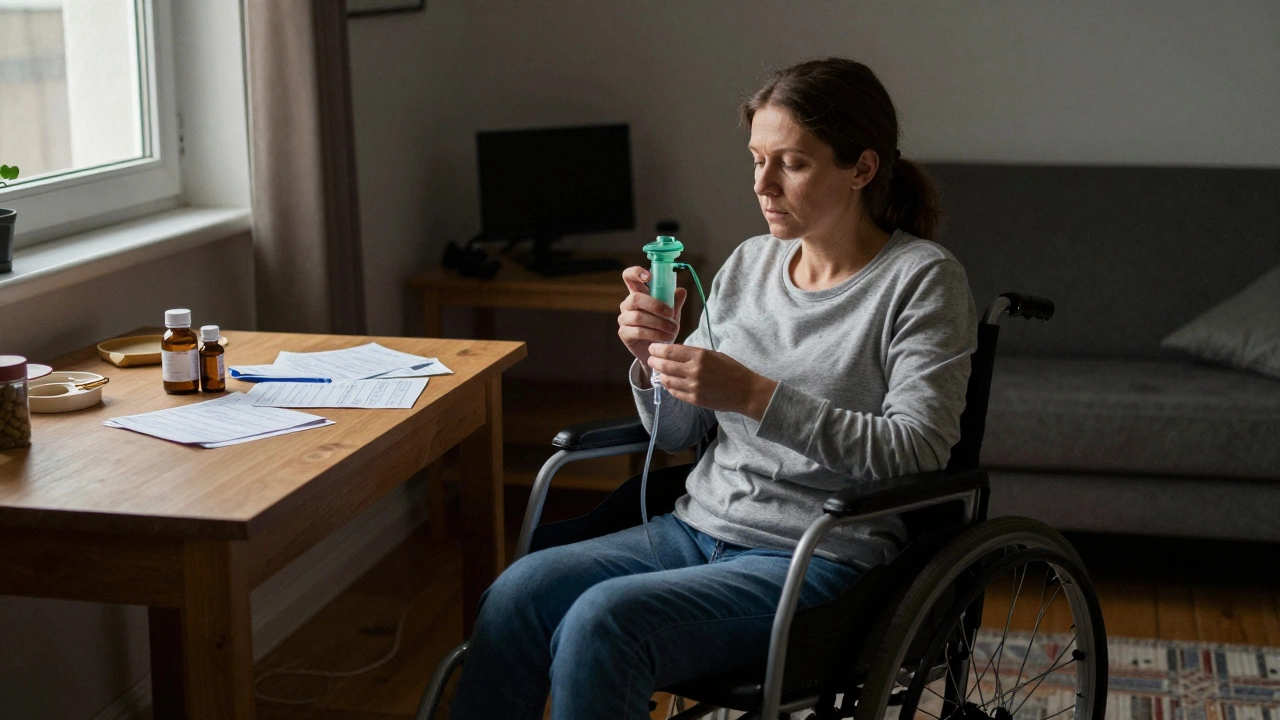
When the pandemic hit, governments rushed to protect the public-but not everyone was included in those plans. For disabled sex workers, lockdowns didn’t just mean lost income. They meant lost survival strategies. Many relied on in-person work to afford mobility aids, medications, or home care. When clients vanished overnight, so did their ability to pay for essentials. Harm minimisation policies, designed to reduce risk, often ignored the reality that for this group, sex work wasn’t a choice-it was a lifeline. One woman in Melbourne, who uses a wheelchair and has chronic pain, told me she had to sell her oxygen concentrator to buy insulin. That’s not a statistic. That’s survival.
Some turned to online platforms, but not everyone could. Screen readers don’t always work with escort booking sites. Payment processors flagged transactions from sex workers, freezing accounts without warning. A few found work through niche networks, like escorte girl à paris, where discretion and tailored services offered a fragile sense of stability. It wasn’t ideal, but it was something. And in a world that had shut down so much, even that mattered.
Why Harm Minimisation Failed Disabled Sex Workers
Harm minimisation in public health usually means safer spaces, clean needles, testing, and education. But for disabled sex workers, the biggest harm wasn’t the work-it was being erased from the conversation. Public health posters showed people using condoms. They didn’t show someone using a catheter while working. They didn’t show a person with cerebral palsy struggling to reach a bedside table because their home wasn’t accessible. When governments talked about reducing transmission, they didn’t ask how disabled people could isolate if they needed daily personal care from strangers.
Many disabled sex workers were told to stay home. But staying home meant losing access to income, which meant losing access to healthcare. It was a cruel loop. A 2021 study by the Global Network of Sex Work Projects found that 68% of disabled sex workers reported skipping medical appointments during lockdowns because they couldn’t afford them. Only 12% received any government support. The rest? They adapted. They pooled resources. They shared tips on how to clean surfaces with limited mobility. They created WhatsApp groups to warn each other about unsafe clients. They didn’t wait for permission. They just kept going.
The Myth of ‘Safe’ Alternatives
Advocates pushed for online work as the ‘safe’ alternative. But for many disabled people, digital access isn’t a privilege-it’s a barrier. Not everyone can afford high-speed internet. Not everyone can use a mouse or type for hours. Voice assistants often misunderstand regional accents or speech patterns linked to disability. And platforms like OnlyFans? They ban accounts without explanation, leaving people with no warning and no income.
One woman in Sydney, who has muscular dystrophy, spent months building a client base on a niche site. She posted videos, offered tailored sessions, and built trust. Then, without notice, her account was suspended. She had no way to appeal. No phone number to call. No human to talk to. She lost $8,000 in three days. She didn’t report it to the police. She didn’t post about it online. She knew no one would care. That’s the reality: the systems meant to protect you often don’t see you at all.

How Some Communities Fought Back
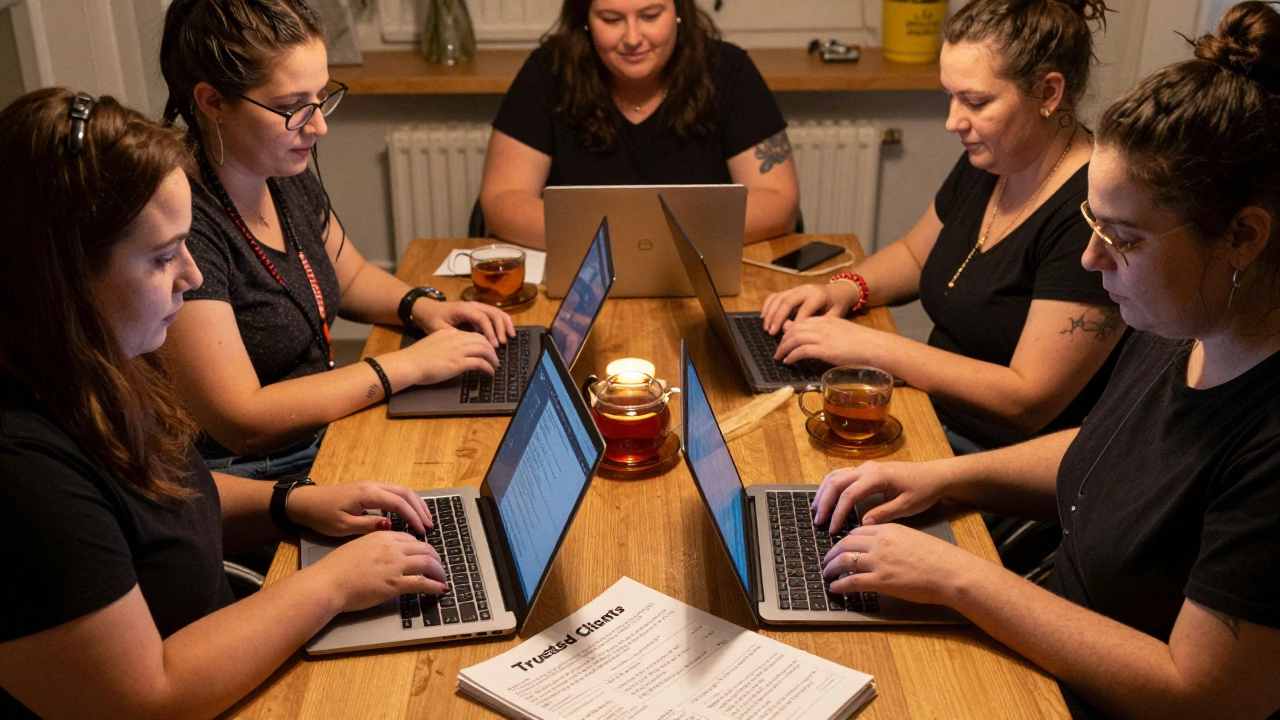
But not everyone stayed silent. In London, a group of disabled sex workers formed a mutual aid network. They raised money for accessible housing. They bought mobility scooters for those who couldn’t afford repairs. They hired a lawyer to help people challenge account bans. They even created a simple app-no fancy features, just a text-based directory of trusted clients who understood their needs. No photos. No profiles. Just names, pronouns, and notes like “uses a catheter,” “needs 10 minutes to transfer,” or “brings own pillows.”
It wasn’t glamorous. It wasn’t funded by NGOs. But it worked. They didn’t ask for permission. They didn’t wait for policy changes. They built what they needed, right then. One member said, “We didn’t have a seat at the table. So we made our own table-and invited others to sit with us.”
The Hidden Role of Technology
Technology didn’t save disabled sex workers. But it helped some survive. Apps like Signal and Telegram became lifelines. They were encrypted, easy to use on screen readers, and didn’t require credit cards. Some used PayPal alternatives like cryptocurrency wallets, though that came with its own risks. Others turned to local community centres that offered free Wi-Fi and quiet spaces to work.
But even tech solutions had gaps. One man in Toronto, who has spinal cord injury, used a voice-controlled app to book clients. But when the app updated, it stopped recognising his speech patterns. He couldn’t get customer support. He spent weeks trying to fix it. He lost clients. He lost income. He lost hope. He wasn’t alone. Many disabled sex workers faced the same thing: tech that promised accessibility, but only for people who fit a narrow standard of ability.
What Real Harm Minimisation Looks Like
Real harm minimisation doesn’t just reduce infection risk. It reduces poverty. It reduces isolation. It reduces the violence of being ignored.
It means funding peer-led support networks. It means allowing sex workers to access emergency funds without criminal background checks. It means making public health materials available in accessible formats-audio, braille, plain language, captioned videos. It means training social workers to understand that sex work isn’t always exploitation-it can be a form of labour, and disabled people have the right to safe, consensual work.
It also means listening. In 2023, a small group in New Zealand invited disabled sex workers to co-design their pandemic response. They didn’t invite them to speak at a panel. They gave them budgets. They let them write the policy. The result? A system where clients could book care workers who were also sex workers, with clear safety protocols, paid sick leave, and transport subsidies. It wasn’t perfect. But it was real.
Why This Matters Beyond the Pandemic
The pandemic didn’t create these problems. It just made them visible. Disabled sex workers have always been on the margins. They’ve always been excluded from healthcare, housing, and legal protection. But now, more people know it. And that’s a chance.
Organisations like the International Network of Sex Work Projects and the Global Alliance Against Traffic in Women have started including disabled voices in their advocacy. Some cities now have dedicated funds for sex worker mutual aid. A few universities are researching how disability and sex work intersect-finally, with real input from the community.
But progress is slow. And the next crisis is already coming. Climate disasters, economic collapse, new pandemics-they won’t wait for policy to catch up. The disabled sex work community has already shown how to survive without permission. The question is: will the rest of us learn from them?
For now, some still work. Some still text clients. Some still pay for meds with cash. And somewhere, a woman in Paris is typing out a message: escorte femme paris. She’s not looking for pity. She’s looking for a way to breathe.
Another, in a small town in Spain, posted a simple ad: escorr paris. It was a typo. But her clients knew what she meant. They came anyway. They brought snacks. They asked how her back was. They didn’t call her a victim. They called her by her name.